How the 2026 World Cup Brought Football and Fashion Closer Than Ever
With Manchester placing itself at the centre of a cultural phenomenon
Written by Fergus Allen
5 min read.
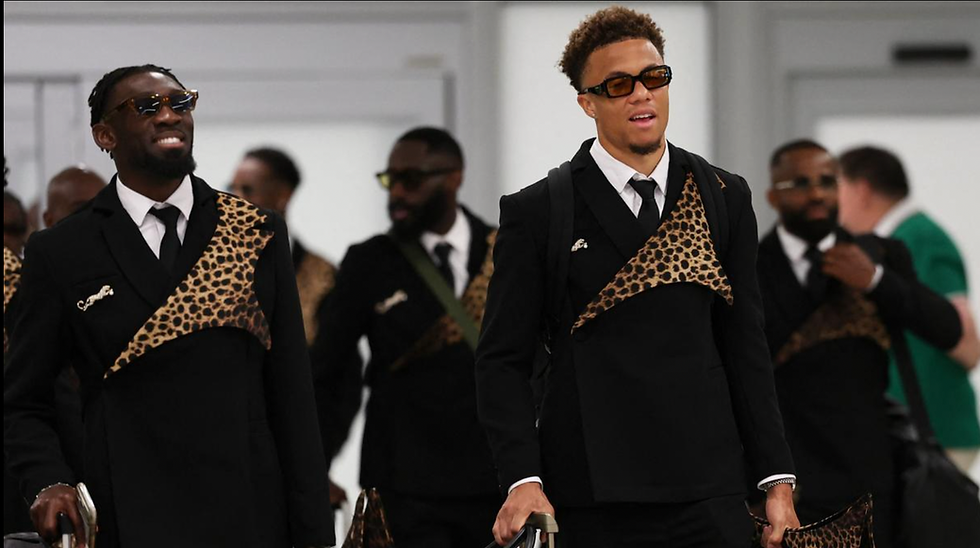
On Thursday 11 June 2026, the DR Congo national team touched down at George Bush Intercontinental Airport in Houston, Texas, for their first World Cup since 1974. The squad arrived in custom-tailored black suits with striking leopard-print lapels, and matching animal-print travel bags.
Designed by Congolese designer Alvin Junior Mak, the look celebrated both the national team’s nickname, the Leopards, and La Sape culture: the Congolese tradition of using dress as a form of dignity, joy and self-expression. Mak described wanting the moment to “change people’s views on Africa.”
Using fashion as a tool to unlock true identity is not an accident. It is the result of something that has been building for decades, and that the 2026 World Cup, broadcast to an estimated six billion viewers, brought fully into the open.
The Scale Of The Moment
The breadth of fashion in America this summer was unprecedented.
Nike launched its X2 initiative, pairing seven designers with seven national teams to create capsule collections sitting at the intersection of “the pitch, the street, and the community”. Palace Skateboards partnered with Nike for England, merging Three Lions heritage with Palace’s streetwear aesthetic, fronted by Wayne Rooney in a campaign film that felt as much like a fashion shoot as a football moment.
Nike’s adoption of this, and their understanding that this is “the future of football culture”, makes clear that this is not a niche trend, but a mainstream cultural shift. And it is being driven, in part, by the athletes themselves.

Expression Through Fashion
Hammersmith-born Michael Olise, France’s electric young winger, opted out of a traditional boot sponsorship deal, forgoing the kind of arrangement that sees most elite players locked into a single brand and a fixed aesthetic.
Instead, he chose creative freedom. Olise’s ability to coordinate his boots with whatever kit he is wearing reflects how he treats the visual detail of his performance as an extension of his identity.
At this World Cup, he stepped out in two pairs of Nike boots hand-painted by Los Angeles-based artist Matt DiGiacomo, who describes his brand Matty Boy as a “movement that blends streetwear culture, bold design, and creative freedom.”
Olise’s expression is unusual in a sporting landscape that has spent decades treating the athlete’s image as an asset belonging to the club, the sponsor, or the federation. The athlete has typically had their commercial identity built around them rather than by them. Instead, Olise took control of his own image.
Manchester At The Centre
Manchester’s ingrained football culture and rapidly developing fashion scene placed the city at the centre of this conversation.
During this World Cup, two Manchester-born brands made that connection explicit.
The luxury streetwear label Represent launched its Champions campaign to coincide with the tournament, bringing in Rio Ferdinand and James Trafford to front a capsule that bridges the brand’s British roots with the US cultural moment that the World Cup in America represents. A six time Premier League winner, Ferdinand helped shape a generation of British football, partnered in the shoot with Trafford, who himself is coming off the back of winning a cup double with Manchester City.
The two are united by their ties to the North West, representing the past and present of Manchester’s footballing culture.
Similarly, Clints Inc, built from the Northern Quarter and rooted in sneaker culture and terrace aesthetics, teamed up with the former Manchester United and England defender Wes Brown to present their latest World Cup-adjacent collection. Not known for fashion expression during his playing days, Brown spoke openly in conversation with the brand about the ‘relaxing’ of rules between football and fashion.
His words serve as a reminder that this shift is still taking place, and that it is changing not just what athletes wear, but how they think about who they are off the pitch.

Beyond The World Cup
The intersection between sport and fashion has never been more visible than it was this summer.
The question is no longer whether sport and fashion belong together. The question is who gets to decide how that story is told, and whether the athlete is the one telling it.
The World Cup stands as a global example of a shift that is also happening closer to home. Across British football and beyond, athletes are developing creative identities alongside their careers.
Their style, their voice, their identity beyond the sport carries real weight; not only commercially, but culturally, and personally.


Comments